Why HCP Communication Style Preference Still Matter - Even When You Can't Use Their Preferred Channel
August 27, 2026
← Back to Blog List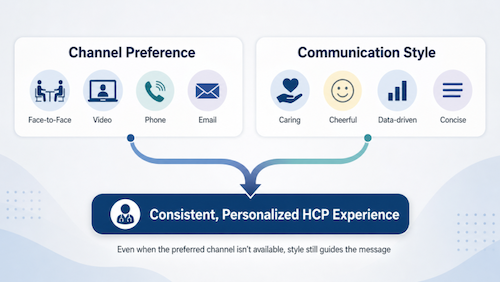
Personality-driven communication style is the hidden lever behind better omnichannel engagement.
Pharma teams now capture two things about each healthcare professional (HCP):
- Channel preference is how they like to receive information.
- Communication style is how they like that information to be framed.
In practice, the preferred way of reaching someone is often blocked. Access rules, compliance, resourcing, and local market limits get in the way. Communication style still pays off, because you can match the tone on whatever channel you can use.
What the evidence shows
Hybrid is the default. McKinsey's 2026 B2B research finds that nearly 60% of B2B customers prefer a mix of digital and remote human contact. Experience quality matters more than having every channel available. For pharma, that means coherent journeys across the channels you can actually use.
People already mix channels. A Harvard Business Review analysis of 46,000 shoppers found that 73% use multiple channels and 6 or more touchpoints before they decide. Omnichannel customers spend about 10% more online and about 4% more in store, and they come back more often. HCPs do the same with reps, digital content, and guidelines. Design for that mix.
Consistency builds trust. Research on channel integration shows that a consistent, transparent experience across channels drives trust, engagement, and repeat behaviour. A well-joined-up experience still helps when the preferred channel is unavailable.
What to do with it
Treat the two as a pair. Channel preference tells you which medium to try first. Communication style tells you how to write and speak, on every channel.
Communication style also signals the shape of the content: warmth, energy, evidence, or brevity. It signals whether they want a quick update or a deeper reference, and whether they lean toward a live conversation or a message they can read later.
Capture both for each HCP, then apply them together:
- Someone who likes written updates and evidence should still get references and data when the conversation is by phone.
- Someone who likes a short phone conversation should still get a brief, outcome-oriented follow-up when it goes by email.
Recording both, and using them when you can, shows respect for the HCP's time. Ignoring them is what makes pharma outreach feel generic.
The bottom line
Channel preference and communication style are practical tools for every interaction you can deliver. Customers expect personal, hybrid, multi-channel experiences, and a consistent experience across those channels is what builds trust.
The useful question is how channel preference and communication style shape the journeys you can actually run.
Selected references
- McKinsey - B2B customer engagement and hybrid models (2026)
- Harvard Business Review - Omnichannel retail study (46,000 shoppers)
- Academic research on channel integration quality and customer engagement
- Healthcare-specific studies on HCP channel use and preferences
Related Articles
Beyond the Mass Email: The Imperative of Personalization in Pharma
Why HCPs are tuning out generic communications and how personalization is transforming engagement.
Pharma Marketing: What Is Working for HCPs in 2025
Key insights from pharma marketing leaders on effective HCP engagement strategies.
How Omnichannel is Transforming Pharma Engagement
The digital transformation journey and its impact on healthcare provider relationships.